
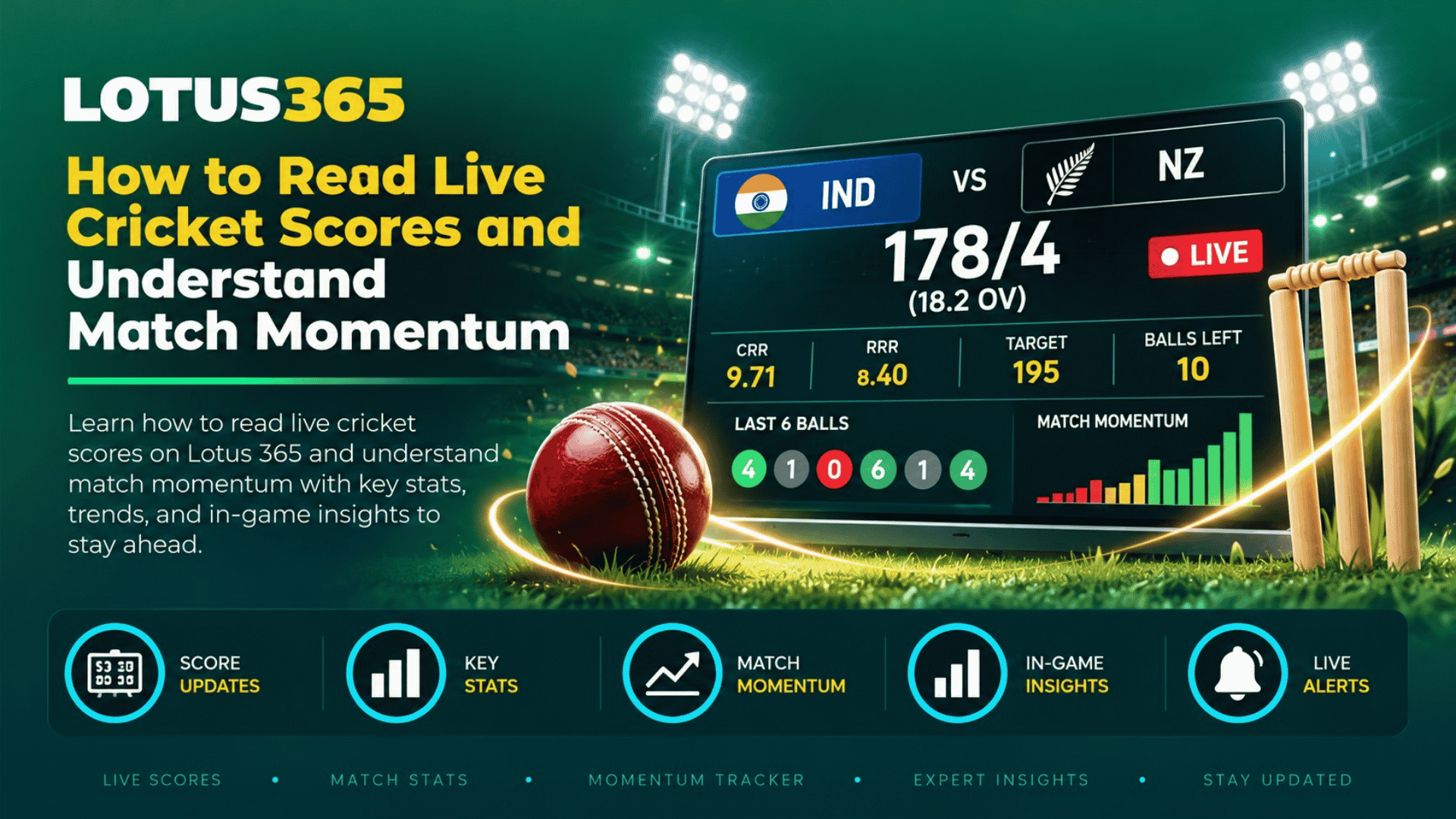
Chasing a target in India is a bit like a roller coaster ride. One over brings a boundary, the next a wicket, and the group chat goes nuts. Learn how to read live cricket scores for more than simply runs and wickets.
Live Cricket Scores: Understand the Scoreboard Quickly
After 17.2 overs the score is 146/4. That’s 146 runs and four wickets down. The team has bowled 17 overs and two legal deliveries of the next over.
Score services may also show the current batsmen, bowler, partnership and previous over.
First, pinpoint the innings. One is when a team sets a total, the other is when it chases one. That same score can mean different things depending on the target, overs left and wickets in hand. In-context Live Cricket Scores make it easier to judge during a close finish.
Read the Scorecard, Not Just the Big Number
A score can’t tell the whole story. 90/1 after 10 overs is a different proposition than 90/6. The freedom the remaining batsmen have to attack depends on the number of wickets left.
The live cricket scorecard consists of runs, balls, boundaries, strike rate, overs, runs given and wickets. Lotus365 readers are advised to cross-check updates with a reputable or official scorecard. Is the batter scoring quickly? Is a partnership rebuilding or accelerating? Live Cricket Scores are more meaningful when you read these details together.
Understand Overs, Balls and Run Rate
An over is six balls that count. 12.3 overs means 12 complete overs plus three balls and not 12.3 decimal overs.
Cricket Run Rate The average number of runs scored per over ; runs divided by overs . 9 runs per over: A team that scores 72 in 8 overs has a run rate of 9.
The rate is an indication, not a judgement. In an ODI seven an over is steady, in a T20 chase it’s slow.
Runs scored from wides and no balls are not counted as legal balls. That affects the remaining deliveries of an over. If a score looks funny, check the extras column before you assume the scoreboard is wrong.
What Required Run Rate Tells You
Required run rate The run rate that the chasing side need to score at. India need 60 from five overs, that’s 12 an over.
Divide runs needed by overs remaining. Figure it out . Needing 48 off six overs is eight an over. The figure varies from delivery to delivery.
If the rate climbs, don’t panic. It’s a chaseable total with boundaries but the same chase can be tricky with wickets falling. Live Cricket Scores: Follow the changing equation.
Spot Cricket Match Momentum
Cricket match momentum is the team that seems to be in the driving seat. Read the runs, wickets, partnerships, dot balls and the situation of the match.
Let’s say India hit 14 in an over and then lost two wickets for 3 runs in the next. Pressure changes quickly. That’s a change of momentum.
Look for quick partnerships, dot ball pressure, wickets after boundaries and economical overs. Live Cricket Scores give hints. You connect the dots to the Live Cricket Scores story.
Momentum is not a formal statistic or a promise. It details the match pattern – the boundaries, the dot balls, the wickets, the partnerships. Live Cricket Scores show these changes but one over can change the picture again.
T20 and ODI Scores Need Different Context
In T20, teams have 20 overs, so a burst of boundaries can count. A score of 55/1 after six overs could be a platform; the same total after 10 ODI overs could be a steady start.
Look at the format, the pitch, the dew, wickets remaining before comparing totals. If you’re looking at lotus cricket content, one number shouldn’t be the whole story.
Check Partnerships and Individual Form
Partnerships tell you how the batters combine. A T20 innings can be raised with 40 off 25 balls, an ODI recovery with 40 off 70 balls.
Check the runs, balls, boundaries and strike rate of the batsmen. Bowlers, check overs, runs, wickets, economy. A bowler who doesn’t take a wicket can still help to build pressure by not conceding runs.
Review team progress and personal input together One batter attacks and the other rotates strike.
Strike rate is calculated by runs divided by balls faced multiplied by 100. A strike rate of 200 means a batter scoring 30 off 15 balls. Live Cricket Scores help compare that contribution with the target, match stage and not simply total runs.
Use Match Updates Carefully
Live cricket match updates can be commentary, rain delays or even revised targets or change in conditions. If there is a delay, use the new target, not an old screenshot.
Check important claims against an official source. An ipl betting id search is no replacement for a verified scorecard.
A Simple Checklist for Reading a Live Score
Use this fast way every time you open a scoreboard:
- See the innings: Which team is batting? What is the target?
- Read runs and wickets: Is the side scoring at will, or has it lost a few batters?
- Overs and balls check: How much time is left in the innings?
- Run rates: What is the rate now, what is the rate needed? Compare
- Look at partnerships: Are batters building partnerships or struggling to rotate strike?
- Watch the last few overs: Boundaries, dot balls and wickets are all indicators of short term momentum.
Check the match conditions: Rain, revised targets, pitch behaviour can change the picture.
Final Thoughts
Live Cricket Scores Reading means runs, overs, wickets, run rate and partnerships. These are the details that explain why a team is ahead or under pressure.
Next time India are chasing under the lights, watch the required rate and wickets in hand. A boundary changes the equation but a smart single counts too. Enjoy the game and count on the trustworthy updates.
FAQ’s
1. How Do I Read Live Cricket Scores Such as 146/4?
Live Cricket Scores 146/4 means the side has scored 146 runs and lost 4 wickets. See how rapidly those runs came within the overs.
2. What Is the Required Run Rate in Cricket?
Run rate is the average number of runs scored per over thus far whereas required run rate in cricket is the average number of runs per over a side needs to achieve to win the target.
3. How can I tell which team has momentum?
Have a look at the recent overs, wickets, partnerships and the pressure of the target. An over can swing the momentum but match situations are important.
4. Why does the scorecard show overs like 17.2?
That is 17 complete overs and two legal balls of the next over. It is not 17.2 overs in decimal.
5. What should you look for first in a close chase?
Target to chase, runs to get, balls to go, wickets in hand and required run rate. Then look to see what batters are in, and who is bowling the next over.